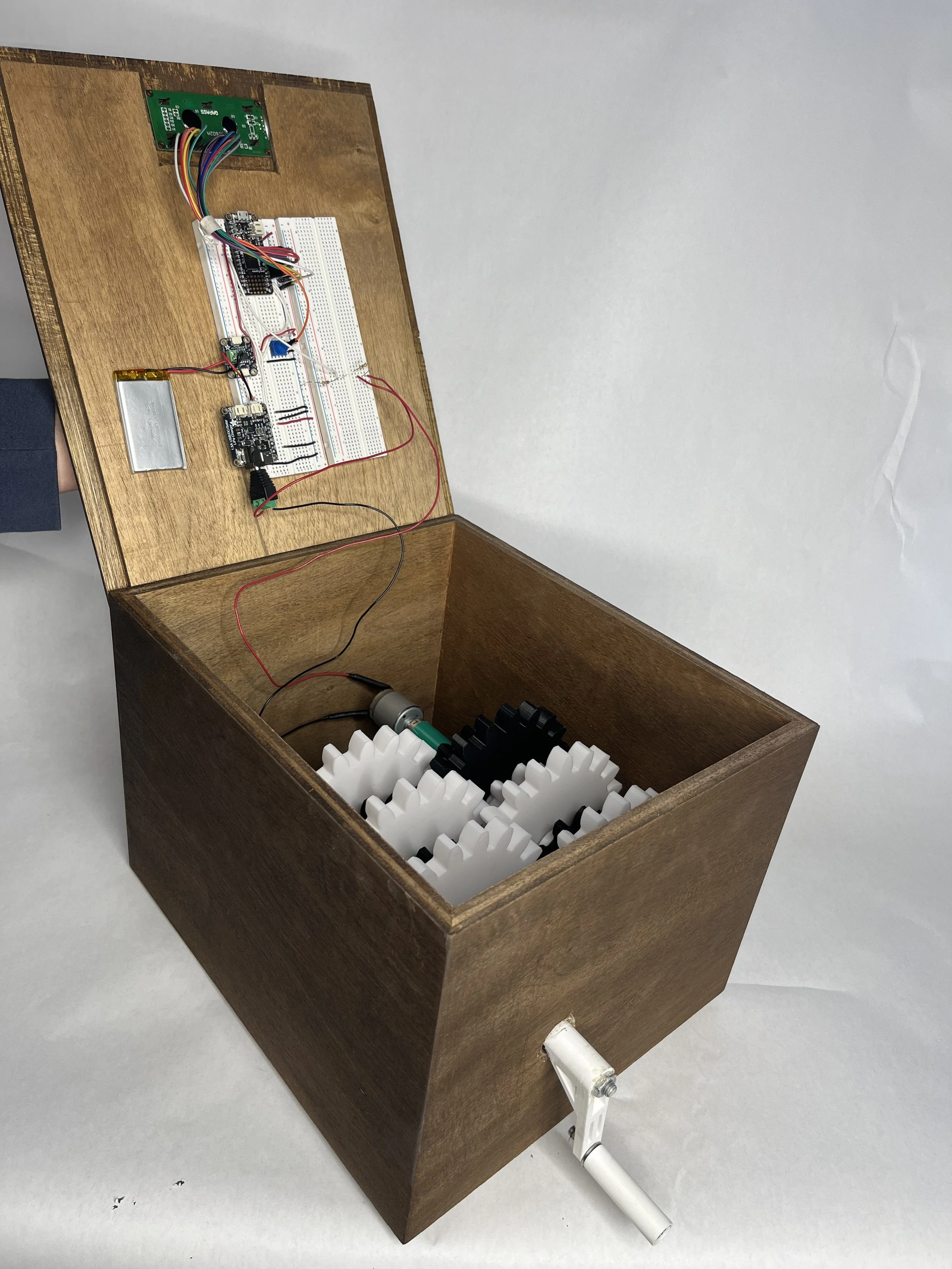
Hand Crank Generator
(first year)
Designed and built a portable hand-crank battery charging system as part of an engineering team project. The device uses a manually powered generator to charge a battery while measuring voltage, current, power transfer, and battery status in real time. A microcontroller and LCD display were integrated to monitor system performance and indicate when charging was complete. The project involved circuit design, programming in Python/CircuitPython, hardware integration, testing, and prototype development within a custom housing. Through this project, I gained experience in embedded systems, data acquisition, power electronics, and engineering design.
Skills Learned
Designing and building a hand-crank battery charging system that converts mechanical energy into stored electrical energy.
Programming a microcontroller in CircuitPython to collect measurements, process data, and control system outputs.
Testing and validating charging system performance through data collection and functional verification.
Creating electrical schematics and integrating electronic components into a cohesive system architecture.
Collaborating within an engineering team to design, prototype, test, and present a complete engineering solution.
Components
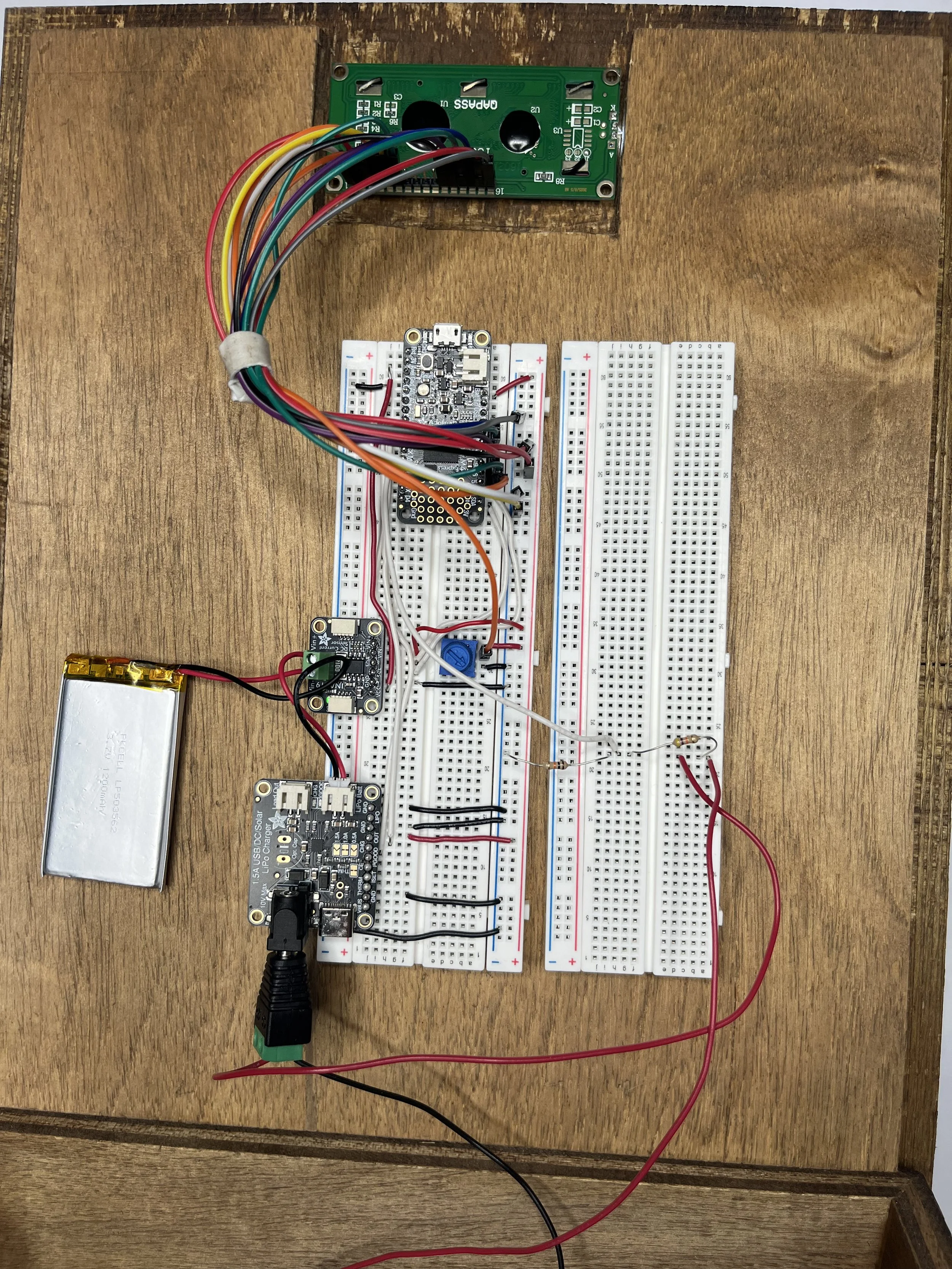
Microcontroller board – coordinates measurements and controls the display.
INA219 measurement board – reads the solar panel and load voltage and current.
Charge controller – safely charges the 3.7 V, 1200 mA battery.
Character LCD – displays system status and measured values.
Breadboard wiring – connects and prototypes all components together.
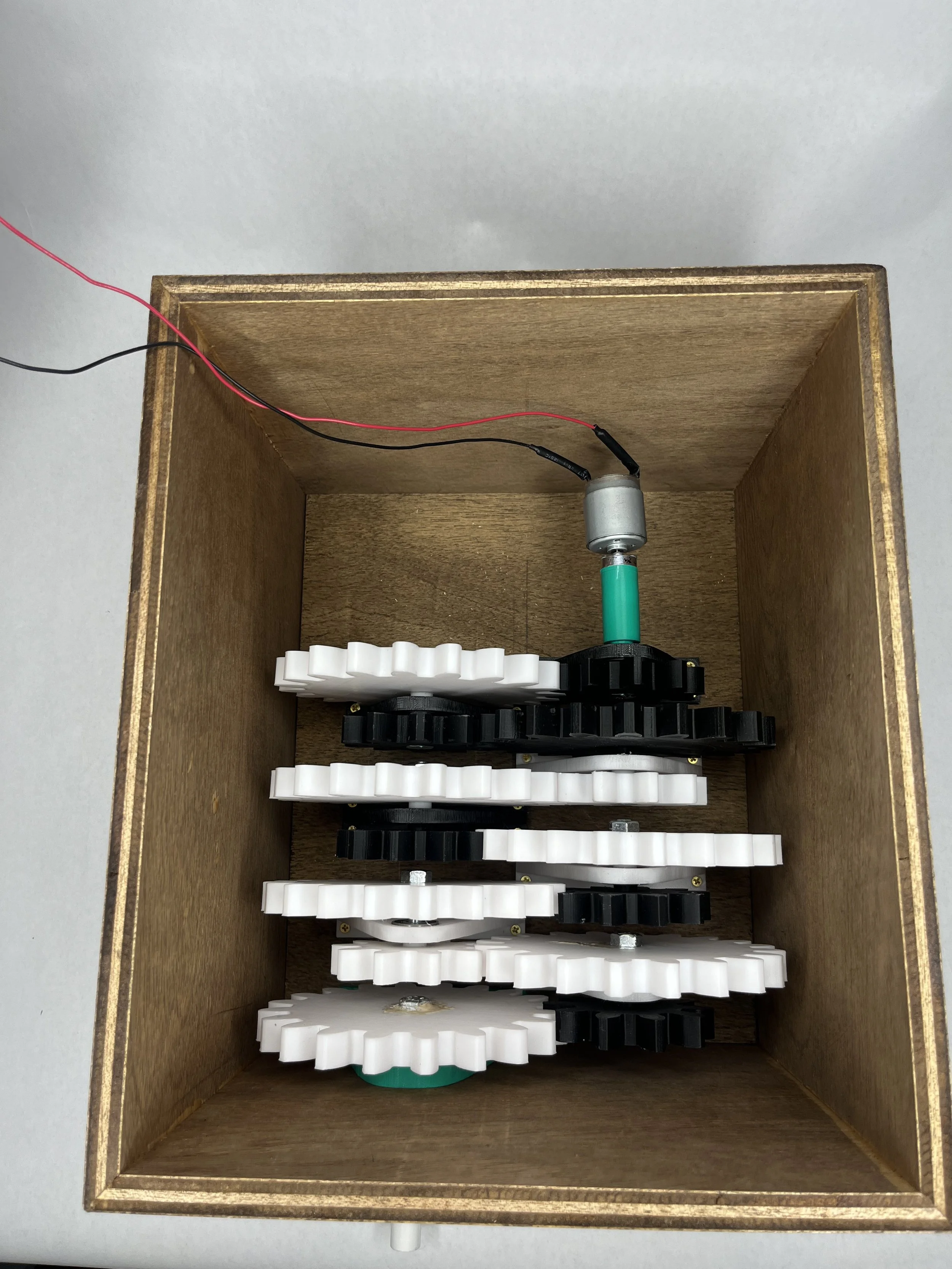
DC motor – functions as a generator, converting mechanical energy from the hand crank into electrical energy for battery charging.
Gear train – increases the rotational speed of the generator relative to the hand crank, improving electrical power generation efficiency.
Bearings – reduce friction in rotating components, allowing smoother operation and more efficient transfer of mechanical energy.
Battery – stores the electrical energy produced by the generator and serves as the charging target.
Custom housing – supports and protects the electrical and mechanical components while providing a compact, user-friendly design.
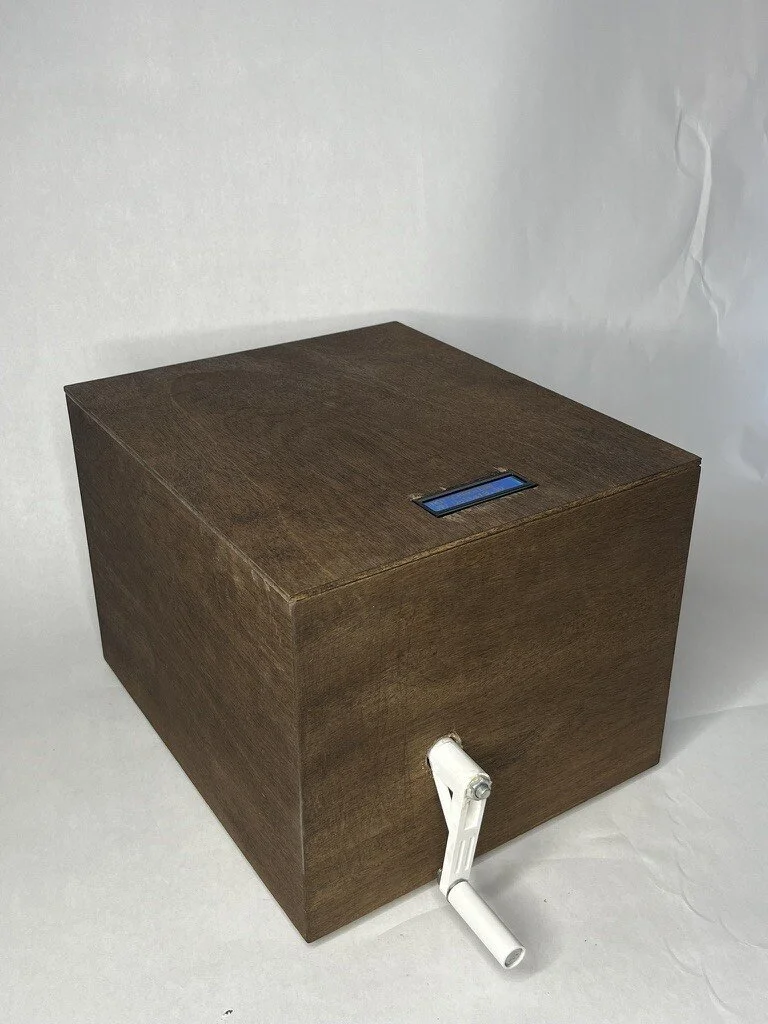
Video of hand crank generator working - battery had already been fully charged causing it to display the output voltage from the batter